The mounting method decides appearance, installation timing, service access, and cost. Here is how encapsulated and surface-mounted automatic covers really compare.
Automatic pool covers are not a single product; they are a family of systems defined largely by how the track is mounted. The two dominant designs are track-encapsulated and surface-mounted, and the choice affects appearance, installation timing, service access, and cost. Neither is inherently better. The right one depends on whether you are building a new pool or retrofitting an existing one, how your deck is finished, and how much you value a clean, integrated look. Understanding the differences before you request quotes will save you from a decision that becomes expensive to reverse once the deck is cut.
A track-encapsulated system recesses the track into the deck or coping so the cover appears to emerge from the pool edge itself. When retracted, the fabric disappears beneath the coping, a bench, or a dedicated housing. The result is the cleanest, most architectural look available, with no visible extrusion running around the pool. The trade-off is planning: encapsulated track is easiest to install during new construction or a full deck renovation, and retrofitting it into an existing deck requires cutting and rebuilding the perimeter. If you are building, it is usually the premium choice.
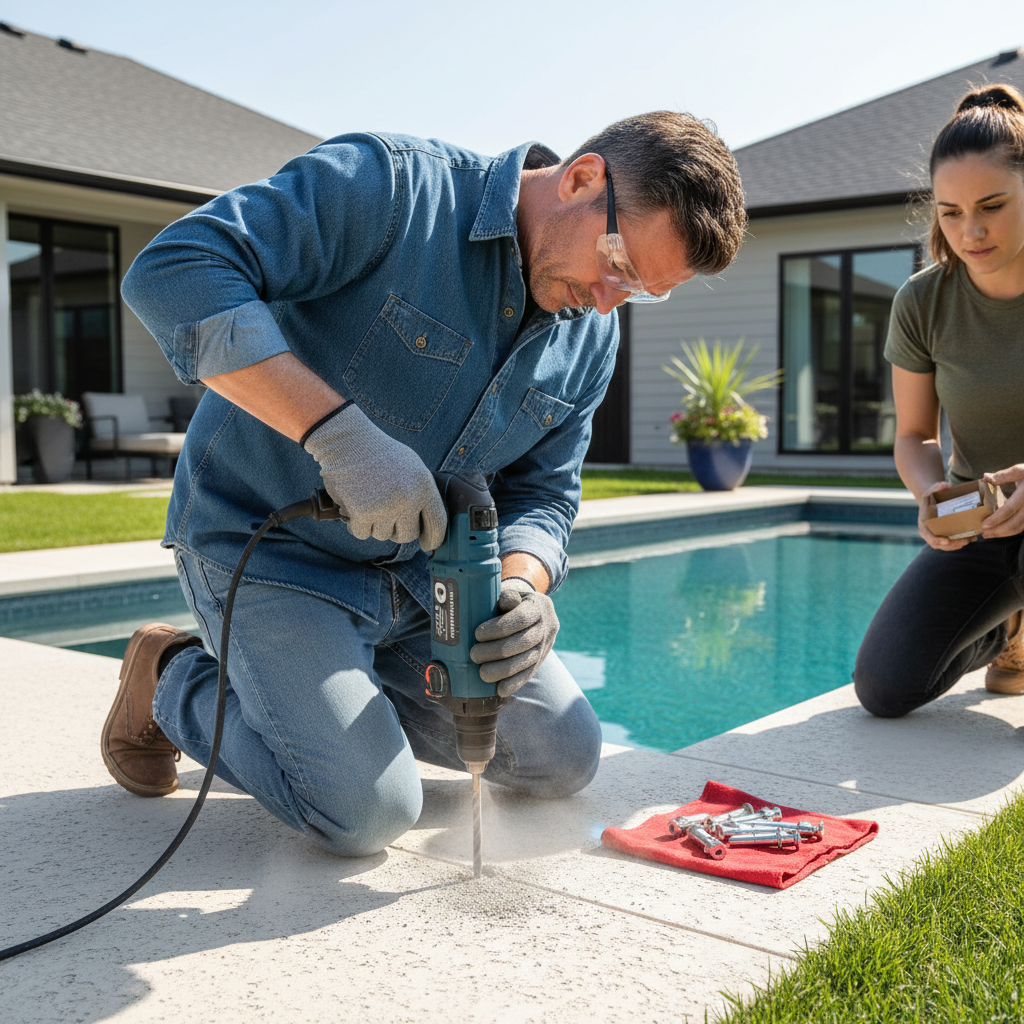
A surface-mounted system places the track on top of the finished deck. It can be installed on an existing pool with far less disruption, which makes it the practical option for retrofits and renovations where the deck is staying. The extrusion is visible, typically an inch or two high, and it runs around the pool perimeter. Modern profiles are low and finished, and many owners find them unobtrusive once installed. The main aesthetic compromise is that the track is part of the deck rather than hidden within it.
Both systems provide the same core safety and convenience benefits and should meet ASTM F1346-91 when properly installed. The difference in safety is marginal, but the ergonomics are not. A surface-mounted track creates a small raised edge that can catch a toe, especially near steps and seating areas, so placement matters. Encapsulated track removes that edge entirely. For households with young children or older adults, the flush finish is a meaningful detail, though proper installation and a taut cover matter far more than the mounting style.
Water management is where installation details show up over time. Both designs rely on weep holes and drainage channels to move rain and meltwater away from the mechanism. Encapsulated channels can collect fine debris and require periodic flushing, while surface-mounted track is easier to see and clean. In cold climates, water that freezes in either track can bind the mechanism, so both need attention during freeze-thaw cycles. Ask your installer exactly how the system drains and where the water goes before you sign.
Cost follows complexity. A track-encapsulated installation commonly runs $10,000 to $20,000 or more because it involves deck modification, precise planning, and more labor. A surface-mounted system typically lands in the $8,000 to $15,000 range and can often be installed with less disruption. Both require electrical work, a motor, fabric, and commissioning. Regional labor rates and pool size move the number significantly. Get itemized quotes for the same specification so you are comparing installation methods rather than different grades of hardware.
Service access is another practical difference. Surface-mounted track is straightforward to inspect and clean, which encourages routine maintenance. Encapsulated track looks better but requires more deliberate cleaning of the channel and careful attention to drainage. In both cases, annual service is what keeps the system reliable. A qualified technician will check tension, ropes, limit switches, and drainage, and will catch small issues before they strand the cover halfway across the pool.
If you are building or renovating and want the cleanest possible result, choose encapsulated. If you have an existing deck and want a capable system without a major rebuild, choose surface-mounted. In either case, insist on a certified installer, confirm local service support, and ask for the drainage and winter plan in writing. The mounting method shapes the look and the installation, but the quality of the components and the fit of the fabric determine how the cover performs for the next decade.
Ask your installer about service access before choosing. Surface-mounted track can be reached with a brush and inspected without removing anything, which makes routine cleaning realistic. Encapsulated track is hidden, so debris accumulates out of sight and requires deliberate flushing. Neither is a dealbreaker, but the owner who understands the access will maintain the system properly. If you are choosing encapsulated, confirm the installer provides a cleaning schedule and shows you where the drain points are, because a hidden channel that clogs can bind the mechanism. Also consider the future: an encapsulated system is integrated into the deck and reads as a permanent feature to buyers, while a surface system can be removed or replaced with less disruption if the deck is renovated later. Match the method to the deck you have and the service support you can rely on.
Finally, verify that the warranty covers the mounting method and the mechanism together. Some warranties separate fabric, motor, and track coverage, and the track is often the most exposed component. Ask for the details in writing and confirm local service before you commit. The best system is one that fits your deck, your habits, and your service network, not simply the one that looks best in a showroom. Request itemized quotes for the same specification, visit a completed installation if possible, and ask the owner how the system has performed through at least one winter. That research turns a significant purchase into a confident decision.
Do not overlook electrical and permit requirements. An automatic cover needs a dedicated power source, and some municipalities require a permit for deck modifications or electrical work. Ask your installer who pulls the permit, who handles the electrical connection, and whether an inspection is required. Confirm that the installers are licensed and insured, and that the work is compliant with local code. A low quote that ignores permits or electrical work is not a real quote, and the hidden costs often appear after the contract is signed. Ask for a written scope that lists every component, the electrical work, the deck modifications, the commissioning, and the cleanup. Confirm what happens if the deck needs repair or if an obstruction is found during installation. Reputable installers welcome these questions because they prevent surprises for both parties. The goal is a system that works reliably for a decade, not the cheapest number on the page.