An honest side-by-side of automatic and manual safety covers on cost, convenience, safety, maintenance, and the situations where each one wins.
The choice between an automatic cover and a manual safety cover is really a choice between two philosophies of pool ownership. One prioritizes effortless daily protection and is willing to pay for it. The other prioritizes lower upfront cost and proven simplicity, accepting some physical effort in exchange. Neither is wrong. What matters is matching the mechanism to your household, your budget, and how often you actually want the pool covered. This list lays out the honest trade-offs on both sides.
Automatic covers win on convenience by a wide margin. Covering or uncovering the pool takes seconds with a key switch or remote, which means the cover gets used every single day rather than only at closing. That daily use delivers compounding benefits: less evaporation, less chemical loss, less debris, less heating cost, and a safer pool whenever it is unattended. For families with young children or pets, the ability to secure the pool instantly, every time, is the single strongest argument for automation. Convenience is not a luxury here; it is the mechanism by which the safety and energy benefits actually happen.
Automatic covers also win on aesthetics and integration. The track is built into the deck, the fabric disappears under a bench or housing, and the pool looks clean and uncluttered. There is no heavy cover to wrestle, no wet fabric to store, and no bag of springs to manage. For high-end properties, new builds, and pools that are meant to look their best at all times, the integrated look is a genuine advantage. The system becomes part of the architecture rather than an accessory.
The drawbacks are cost and complexity. An automatic system typically costs $8,000 to $20,000 or more installed, compared with $1,200 to $4,500 for a manual safety cover. It requires electrical work, deck modifications, and periodic service. Fabric replacement every seven to twelve years and motor or cable repairs add to the lifetime cost. If local service is unavailable, ownership becomes frustrating. And because the system has moving parts, it is only as reliable as its maintenance. Buyers must budget for service and choose an installer with a strong local support record.
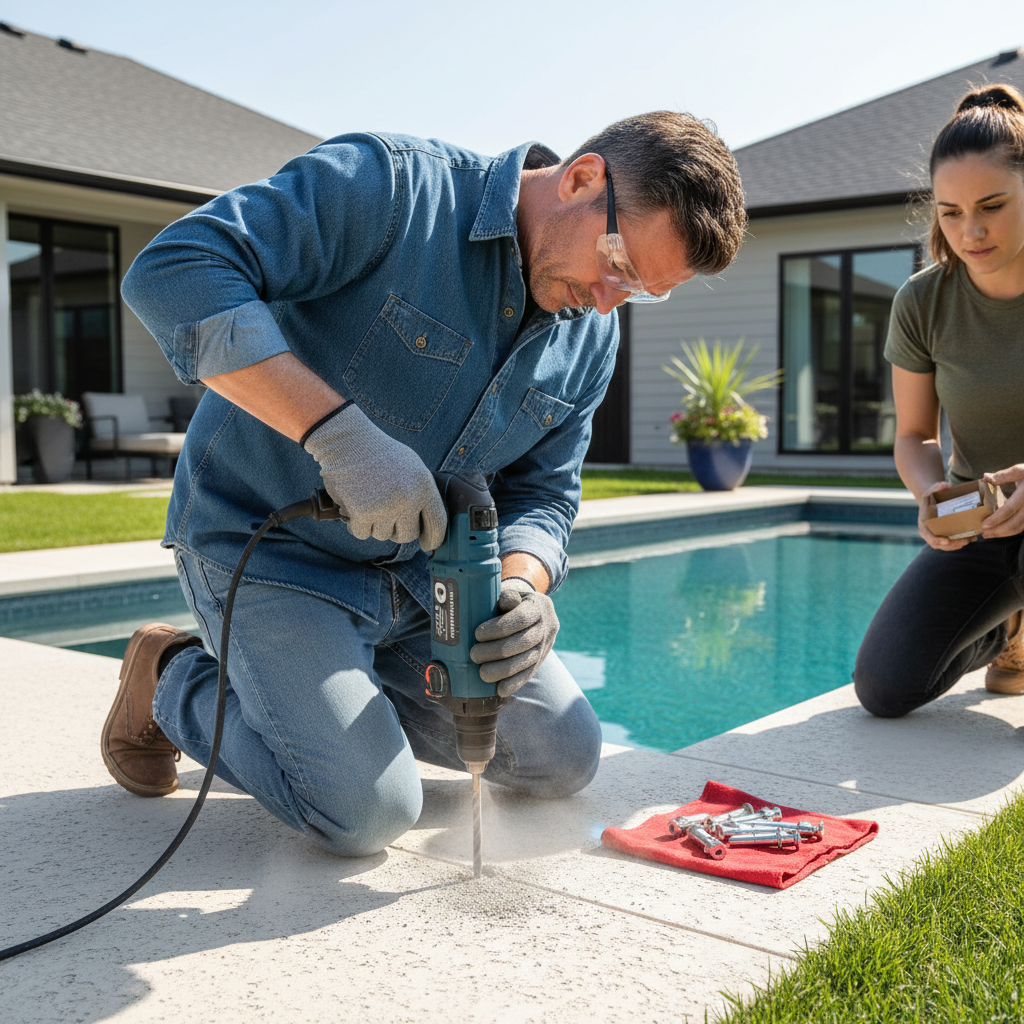
Manual safety covers win on upfront cost, simplicity, and durability. A quality mesh cover has no motor, no electricity, no track, and very little that can fail. It anchors to the deck with springs and stays taut through wind and snow. Warranties stretch from 15 to 30 years, and repairs are usually simple and inexpensive. Installation is straightforward, and the cover can be removed by one adult without tools in an emergency, which is an important safety characteristic. For budget-conscious owners, seasonal properties, or pools that are only covered for winter, a manual cover is the rational choice.
The manual cover drawback is effort. Installing and removing a large safety cover takes time and physical strength, especially when it is wet or covered in debris. Many owners therefore use it only for winter closing, which means the pool is unprotected and uncovered for the entire swimming season. That eliminates the daily safety and energy benefits that make covers so valuable. If the cover is inconvenient, it will not be used, and an unused cover delivers none of its theoretical advantages. This behavioral reality is often underestimated.
There is a middle path worth considering. A manual cover can be paired with a reel or a lift assist for easier handling, and some owners use a manual safety cover for winter plus a solar blanket for daily summer use. That combination costs far less than automation while capturing much of the energy and debris benefit during the season. It does not provide push-button safety year-round, but it is a sensible compromise for households that cannot justify an automatic system. The right answer depends on whether daily, effortless safety is a priority or a nice-to-have.
A simple decision framework helps. Choose automatic if you have young children or pets, use the pool frequently, value aesthetics, plan to stay in the home, and can budget for installation and service. Choose manual if your priority is winter protection, your budget is constrained, you have a simple pool shape, or the pool is seasonal. In both cases, insist on ASTM certification, custom measurement, and professional installation. The mechanism is important, but fit and installation determine whether either cover performs as promised.
Compare total cost of ownership rather than purchase price. An automatic system costs more upfront and carries ongoing service and eventual fabric replacement, but it delivers daily safety, energy savings, and convenience that a manual cover often fails to provide because it is too much effort to use every day. A manual cover costs far less and can last for decades with minimal maintenance, but it is typically used only for winter. The fair comparison is not automatic versus manual; it is automatic versus a manual cover that sits in storage for eight months. Decide which behavior describes your household, then price accordingly.
Before buying either system, ask a consistent set of questions. Is the cover certified to ASTM F1346-91? How is the pool measured, and who verifies the measurements? What exactly does the warranty cover, and for how long? Who installs the anchors, and what happens if a strap pulls out? For an automatic system, who services it locally, what is the expected fabric life, and what do replacements cost? For a manual cover, how much does it weigh, and can one adult remove it without tools in an emergency? The answers will tell you more about the product and the company than any brochure.
Whichever you choose, plan the installation before the season starts. Automatic systems require deck work, electrical connections, and lead time for custom fabrication, so beginning in spring often means waiting until summer. Manual covers also benefit from ordering early, especially custom shapes and unusual colors. Schedule quotes in the shoulder season, confirm lead times in writing, and avoid the autumn rush when every installer is busy closing pools. Good planning is free, and it is the difference between a smooth installation and a stressful one.