A $150 tarp looks like a bargain until you add replacements, water bags, spring cleanup, and safety risk. Here is the 15-year math that changes the decision.
Every autumn, pool owners face the same tempting choice: a cheap tarp and water bags for a couple hundred dollars, or a custom safety cover for more than a thousand. On the surface the tarp wins by a wide margin. Over a decade, the math reverses. Tarps are consumable, labor-intensive, and offer no safety certification, while safety covers are engineered assets with warranties measured in decades. This guide walks through the hidden costs of the tarp route and the genuine long-term savings of a proper safety cover, so you can compare them on equal terms.
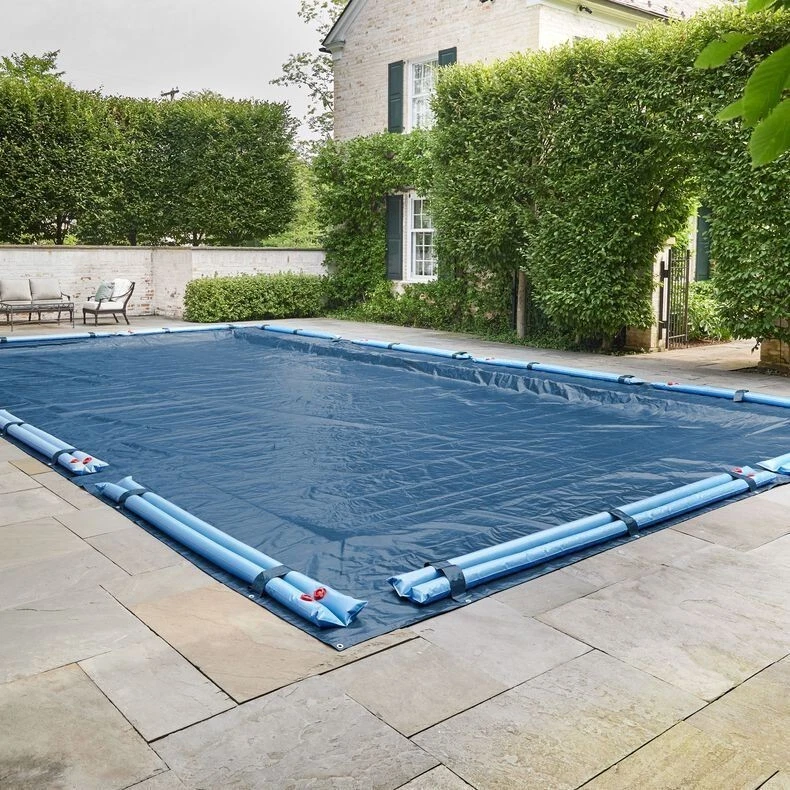
Start with replacement cadence. A typical tarp costs $80 to $250 and lasts one to three winters in a climate with real snow and freeze-thaw cycles. UV exposure, ice, wind, and the weight of standing water degrade the material quickly. Replacing a $150 tarp every two years costs $75 per year before anything else. A standard mesh safety cover at $1,500 with an 18-year warranty costs about $83 per year, and a premium cover at $2,500 over 25 years costs $100 per year. The upfront gap is large, but the annual gap is surprisingly small, and the safety cover delivers far more along the way.
Hardware and labour add up fast on the tarp side. Water bags fail and need replacement. Cables, winches, and grommets wear out. Tarps require careful pumping and cleaning before removal, and a sagging tarp full of leaves and water is heavy, awkward, and prone to dumping debris into the pool. Many owners hire help for closing and opening, which erodes the savings further. Safety covers, by contrast, use anchors and springs that stay in the deck, install taut, and can often be handled by one or two people without pumping off a swimming pool of standing water.
Then there is the safety difference, which has no price tag. A tarp is not a safety cover. It is not tested to ASTM F1346-91, it does not support the weight of a child or pet, and it can conceal the pool surface in a way that makes an accident more likely. For families with young children, pets, or visiting grandchildren, a tarp is a genuine hazard. A certified safety cover supports hundreds of pounds, prevents falls into the water, and provides a visible, secure barrier. No amount of annual savings justifies exposing a family to that risk, and insurers and buyers recognize the difference.
Pool damage is another hidden cost. Tarps sag, collect debris, and can allow leaves and organic matter to stain the liner or promote algae. Ice and standing water stress the pool edges and deck. In spring, the cleanup can require extra chemicals, vacuuming, and sometimes professional service. Safety covers keep debris out, block sunlight, and allow water to drain or be pumped efficiently, which typically means a cleaner opening and fewer chemicals. Over fifteen years, those spring savings alone can cover a significant portion of the cover's cost.
Do the fifteen-year comparison with real numbers. The tarp path: roughly seven tarps at $150, plus bags, cables, pumps, and cleanup chemicals, easily $1,500 to $2,500 or more, with no warranty and recurring safety risk. The safety cover path: one $1,500 to $3,000 cover with an 18- to 30-year warranty, plus a pump if it is a solid cover. The safety cover costs less per year, protects the pool better, and adds a certified safety barrier. When you include the value of a cleaner opening and fewer repairs, the premium option is not premium at all; it is the economical choice.
There are cases where a tarp still makes sense. Above-ground pools in mild climates, temporary situations, or a single winter before a planned renovation can justify a low-cost cover. Even then, choose a purpose-made winter cover with a proper cable and winch rather than a thin plastic sheet, and never treat it as a safety device. The mistake is not buying a tarp once; it is buying one every two years for fifteen years while telling yourself you are saving money.
The cheapest cover is the one that costs the least per year of service, not the one with the lowest price tag. Safety covers win that comparison comfortably, and they do it while making winters safer, springs easier, and the pool more valuable. If budget is the concern, start with a standard mesh safety cover and upgrade to a tighter weave later; the anchors and installation transfer. Request a measurement-based quote and ask for the cost-per-year breakdown in writing. Once you see the numbers side by side, the decision becomes much simpler.
There is also an environmental cost to the tarp cycle. Cheap vinyl tarps are essentially disposable, and most end up in landfill every few years, along with the water bags and hardware that fail. Safety covers, by contrast, are repairable and supported with replacement parts and patch kits, and a well-built cover can be serviced for decades. Choosing a durable product reduces waste and keeps fewer petroleum-based materials in the waste stream. For owners who care about sustainability as well as cost, the reusable, repairable option is clearly the better long-term choice, and it aligns with the way most households prefer to buy major purchases.
If budget is tight, there is a sensible upgrade path. Start with a standard mesh safety cover and quality brass anchors; the fit and installation are the expensive, permanent parts, and they transfer if you later upgrade the fabric. Keep the cover clean, store it properly, and repair small tears immediately to extend its life. Avoid the temptation to buy the cheapest cover on the market, because low-grade straps and springs fail first and can damage the cover and the deck. A modest, well-maintained safety cover will outperform a premium cover that was installed poorly or neglected, and it will still beat a tarp on cost per year.