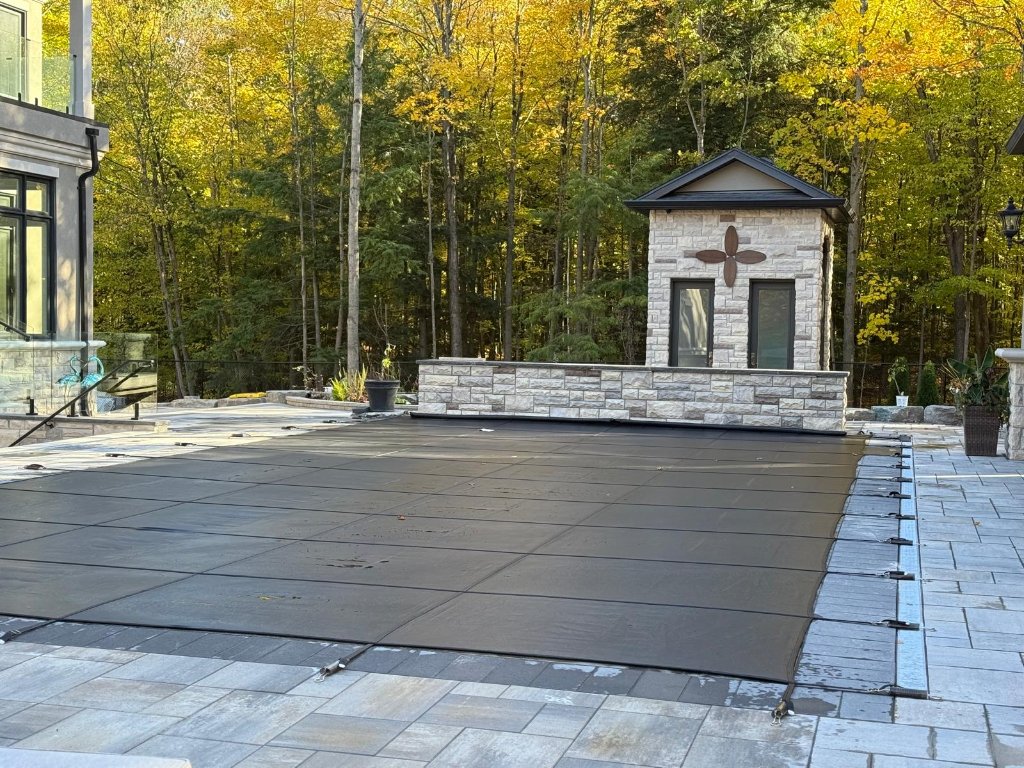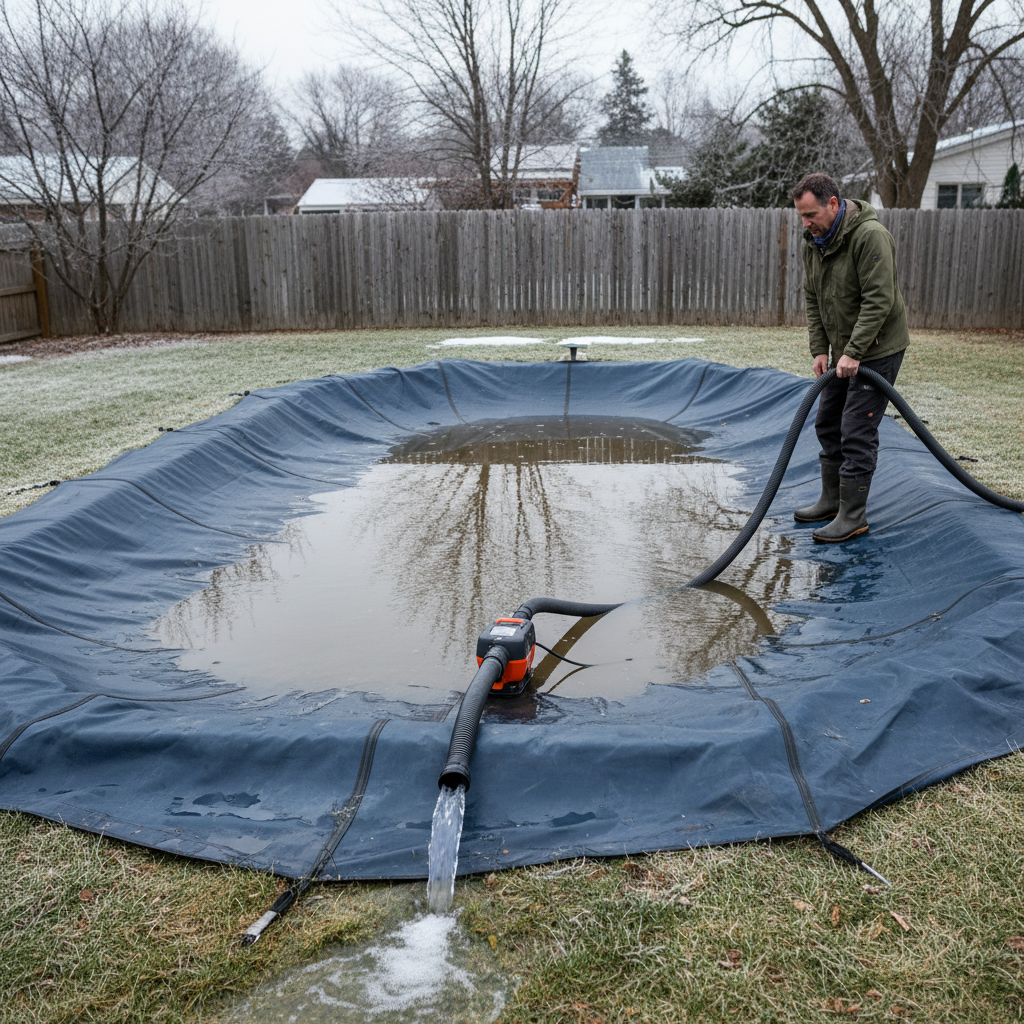
Safety covers support significant weight, but 'safe' has limits. Here is what the standard actually tests and how to manage pets and people around a covered pool.
It is one of the most common questions pool owners ask, usually while watching a dog trot across a winter cover: is that safe? The honest answer is nuanced. A certified safety cover is designed and tested to support substantial weight, and a dog or a person can often walk on it without falling through. But safe for one crossing is not the same as safe as a play surface, and understanding the difference protects both the pet and the cover.
ASTM F1346-91 sets the performance benchmark. A compliant cover must support the weight of two adults and one child, roughly 485 pounds, without collapsing into the pool. It must not allow gaps larger than four inches. These tests are conducted on properly installed covers with correct anchor spacing and tension. That is why a genuine safety cover feels firm underfoot, while a tarp or loosely fitted cover sags immediately.
So can a dog walk on it? Usually yes, briefly, and the cover should hold. But several factors matter. A large dog running and jumping creates dynamic loads far higher than its standing weight. Claws can abrade or puncture fabric over time, especially on older covers. A cover that is wet or covered in snow is slippery, and a dog can slide, panic, or catch a leg near the edge. And if the cover is not properly tensioned or is near the end of its life, its capacity is reduced.
For humans, the same logic applies with more caution. A single adult crossing carefully to retrieve a toy is generally within the design load on a sound, properly installed cover. But walking on the cover routinely, jumping, or gathering several people on it is not advisable. The cover is a barrier, not a deck. Falls, slips, and fabric damage are all possible, and the pool beneath is still a hazard if the cover fails.
Manage pets proactively. Keep the pool area fenced or gated so dogs cannot access the cover unsupervised. Train pets to stay off, and provide an alternative route around the pool. If a dog does get on the cover, call it calmly to the edge rather than chasing it, which can cause running and sliding. Check the cover afterward for claw marks, punctures, and loose straps, and patch any damage promptly.
Inspect and maintain the cover so it retains its capacity. Keep the anchors secure and the springs at the correct tension. Repair tears and abrasions before they grow. Replace the cover when the fabric weakens or the warranty life is reached. A cover that is sagging, loose, or visibly worn should not be trusted with weight. When in doubt, treat it as a barrier only and keep people and pets off.
Educate family and guests. Visitors often do not understand that a cover is not a solid surface, especially when it is covered in snow. Post a small sign or simply explain the rule: no walking, no playing, no pets on the cover. Children should be supervised around any pool, covered or not. The cover reduces risk dramatically, but it does not eliminate the need for supervision and barriers.
A certified safety cover can support a dog or a person in an emergency or a brief crossing, and that is exactly what the standard is designed to ensure. It is not a substitute for a deck, a play area, or supervision. Keep pets and people off, maintain the cover properly, and treat it as a barrier that protects the pool. That approach keeps everyone safe and preserves the cover for the winters ahead.
Set a clear household rule: no walking, playing, or jumping on the cover, even briefly. Consistency matters, especially with children and guests who may not understand the risk. A simple rule prevents most incidents and protects the cover from unnecessary wear. Check the cover after any animal access, because claws can leave small punctures that are easy to miss. Run your hand over the area, look for abrasion, and patch anything you find. Small damage repaired promptly stays small.
Consider a secondary barrier for pets. A small fence or gate that keeps dogs away from the pool area is inexpensive and effective. Combined with a certified cover, it provides layered protection and reduces the chance of an unsupervised animal reaching the cover. Education and barriers together are far more reliable than any single device, and they keep both the cover and the household safer.
Train pets to stay off the cover with consistent boundaries. Use the same command and reward the pet for staying away from the pool edge. Provide a clear path around the pool so the pet is not tempted to cross. If a pet does get on the cover, call it calmly to the edge rather than chasing, which can cause running and slipping. Check the cover afterward for claw marks and punctures. A small puncture can be patched, but a pet that habitually walks on the cover will shorten its life. Supervision and boundaries are the most effective solution.
Review the cover's condition after any pet or human access, even if it looked uneventful. Weight concentrated on one area can stretch fabric, bend anchors, or loosen springs. Check the straps, springs, and anchors near where the access occurred. If the cover sits unevenly afterward, have it inspected. A cover that has been stressed may still look fine but have reduced capacity, and safety covers must be reliable. Early inspection prevents a hidden weakness from becoming a failure later in the season.
A quick inspection after any access takes only a few minutes and prevents a hidden weakness from compromising the cover. Keep a patch kit nearby, and note the event in your records so future decisions are informed.